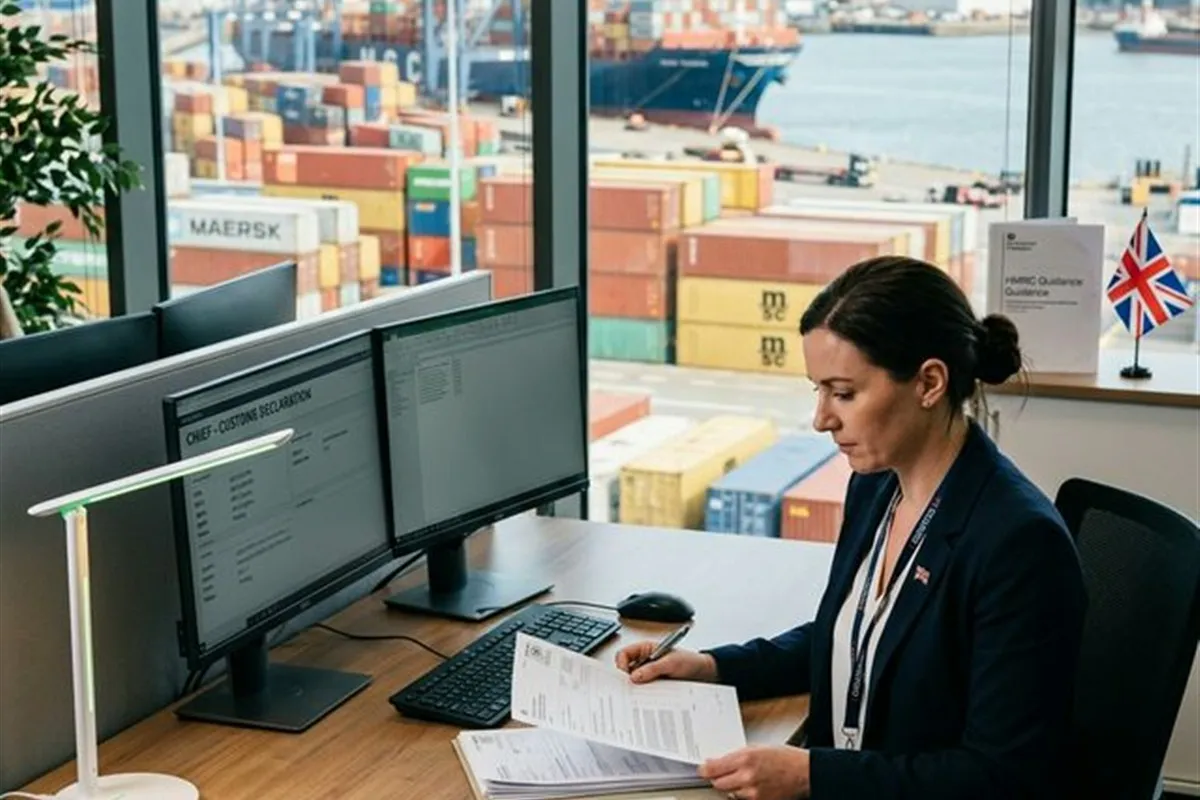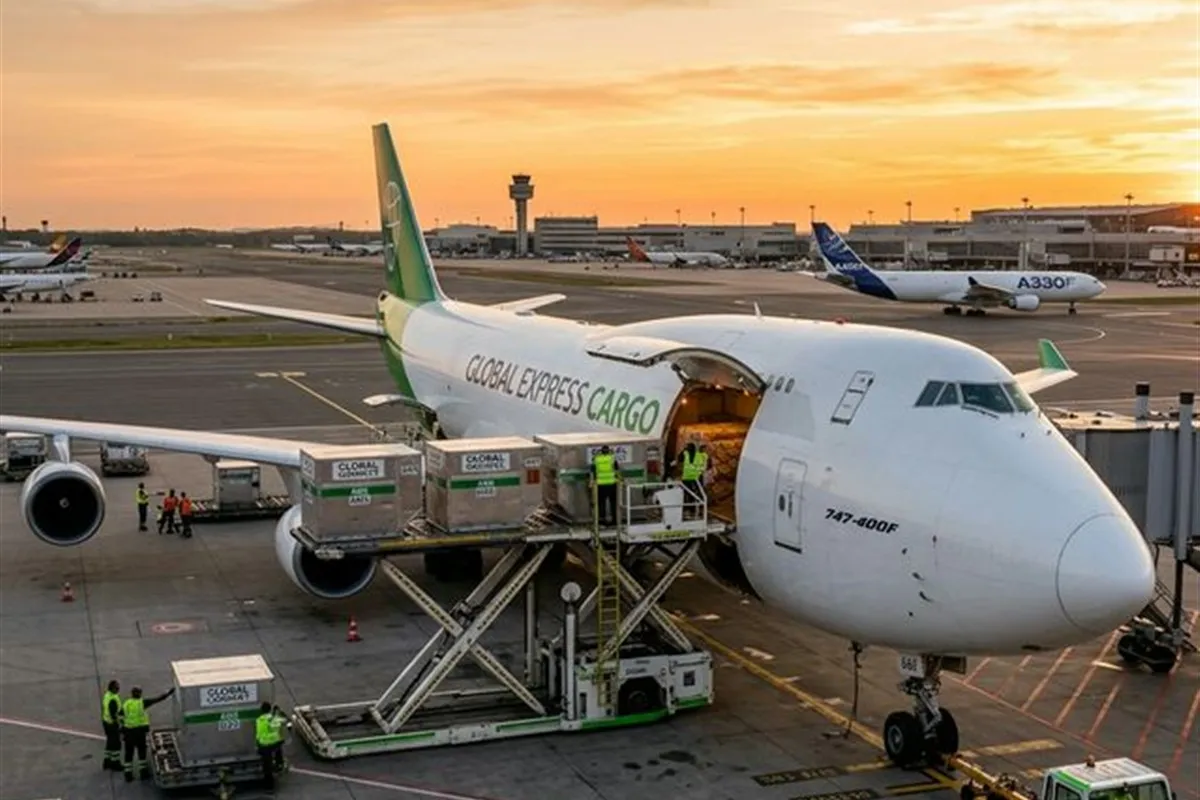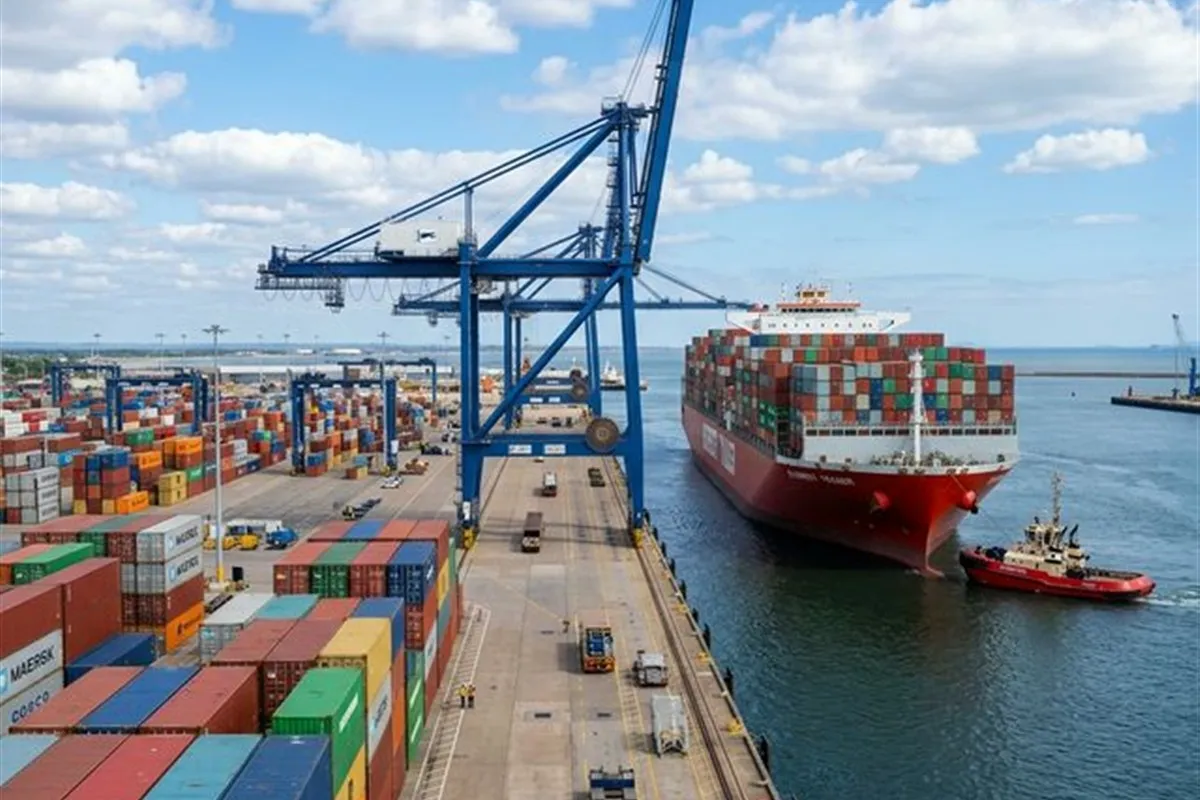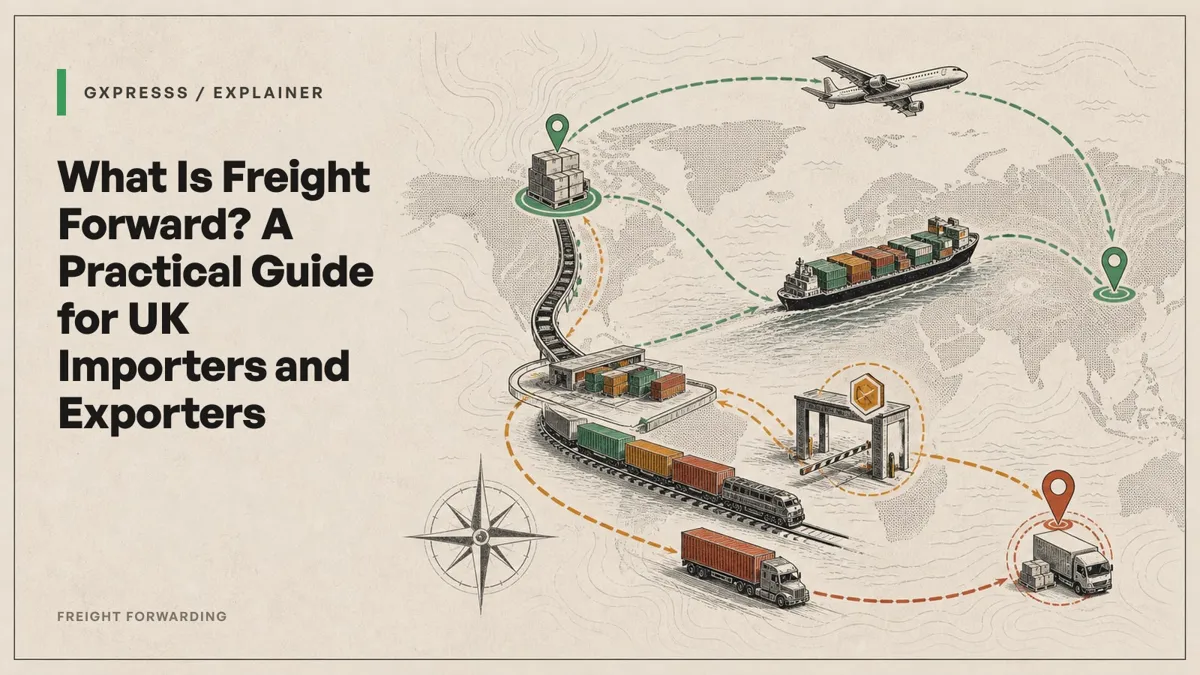
What is freight forward? For a UK importer or exporter, the phrase usually means what a freight forwarder does: coordinates the movement of goods between countries, connects the parties involved, and manages the transport and paperwork needed to get cargo from origin to destination. A forwarder may arrange collection, booking, consolidation, customs information, port or airport handling, delivery and status updates, while the carrier physically operates the aircraft, vessel, train or lorry.
That distinction matters. A forwarder is not automatically the shipping line, airline or haulier, and it does not automatically become the importer of record. Its responsibilities depend on the service agreement, the shipment route, the chosen Incoterm, the customs representation arrangement and the information supplied by the trader. For a UK business, the practical question is therefore not just “can someone ship this?” but who controls each hand-off, who makes the declaration and who pays when something is wrong.
What a freight forwarder actually is
A freight forwarder is a logistics intermediary that plans and coordinates an international shipment on behalf of a cargo owner. It assembles several separate activities into one operating plan. Those activities can include obtaining a transport quote, checking cargo details, selecting a route, booking space, arranging collection, preparing or checking shipping documents, coordinating customs clearance, and organising final delivery.
The forwarder may buy transport capacity from one or more carriers and sell a coordinated service to the customer. On a sea shipment, that could mean connecting a factory collection in Vietnam with a container booking, port movements, UK customs clearance and delivery to a warehouse in Birmingham. On an air shipment, it might involve collection in Germany, an airline booking, export formalities, import clearance and delivery to a retailer in Manchester. When cargo is held at the border, see emergency customs clearance for stuck shipments.
Forwarder, carrier and customs agent are different roles
These terms are often used interchangeably, but they describe different functions:
- Carrier: physically transports the cargo, such as an airline, shipping line, rail operator or road haulier.
- Freight forwarder: coordinates transport and related services, sometimes combining several carriers or subcontractors.
- Customs agent: prepares or submits customs declarations under an agreed representation arrangement. A forwarder may also provide this service, but not every forwarder is acting as the customs agent for every shipment.
- Importer or exporter: the business or person responsible for the commercial transaction and, depending on the circumstances, the accuracy of customs information and payment of duties and taxes.
- Consignee: the party receiving the goods, usually shown on the transport documentation.
One company can perform several of these roles, but the paperwork should make the allocation clear. Ask for the service scope in writing rather than assuming that “door to door” includes customs, duty payment, unloading, storage or delivery appointments.
What freight forwarding does not remove
Using a forwarder does not make the underlying trade obligations disappear. The importer still needs commercially accurate information about the goods, including their description, value, origin and intended use. The business may also need licences, product approvals, preference evidence or records supporting the declared commodity code. The forwarder can identify gaps and explain options, but cannot truthfully create missing facts.
For example, “plastic parts” may be too vague to classify a shipment. The material, function, degree of processing and use in the finished product may affect the commodity code. A supplier invoice showing a low price does not by itself establish the correct customs value if there are assists, royalties, transport costs or related-party issues to consider.
For UK movements in 2026, an EORI number is commonly required for businesses moving goods into or out of the country. The official application and guidance are maintained on GOV.UK at the EORI number service. Treat that as an operating prerequisite to check, not as evidence that every other import requirement has been met.
Why freight forwarding matters to UK businesses
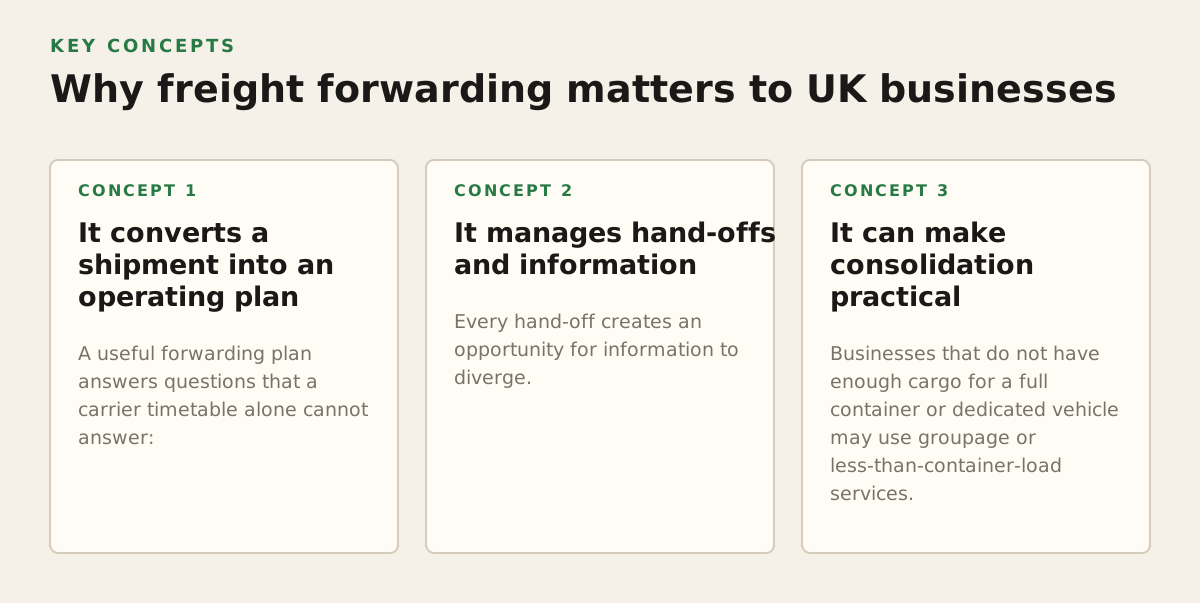
International transport is a chain of dependent events. A missed booking cut-off can cause a later sailing. A wrong package dimension can change the transport charge or make a planned aircraft unsuitable. A customs declaration that does not match the commercial documents can hold cargo after arrival. The forwarder’s value lies in managing these dependencies before one small error becomes a storage charge, stock shortage or failed delivery slot.
It converts a shipment into an operating plan
A useful forwarding plan answers questions that a carrier timetable alone cannot answer:
- Where will the goods be collected, and are they packed and ready by the collection date?
- Which transport mode matches the required delivery date, cargo characteristics and budget?
- Who provides export information at origin?
- Who is responsible for UK import clearance and any transit movement?
- Which party pays duty, import VAT, port fees, examination costs and storage?
- Where will the goods be delivered, and can the receiving site unload them?
- What happens if the vessel, flight, lorry or delivery slot changes?
This is particularly important for e-commerce businesses. A container of stock may have a much lower unit transport cost than repeated air consignments, but a late replenishment can cause lost sales. Conversely, air freight can protect availability for high-value or urgent stock while being a poor choice for bulky, low-margin products. The correct decision is not “sea is cheaper” or “air is faster” in isolation; it is the total cost of the service level required.
It manages hand-offs and information
Every hand-off creates an opportunity for information to diverge. The supplier’s invoice may use one description, the packing list another, and the booking instruction a third. The forwarder should reconcile the operational details: pieces, weight, dimensions, marks, shipper, consignee, delivery address and ready date. Customs data adds another layer: commodity code, origin, value, procedure and required documents.
That coordination reduces avoidable surprises, but it does not guarantee clearance. A forwarder cannot control a government inspection, a carrier cancellation, an incomplete supplier document or a product-specific licensing decision. Good practice is to maintain a written exception process: who is contacted, what evidence is needed, and whether the cargo should be held rather than moved onward.
It can make consolidation practical
Businesses that do not have enough cargo for a full container or dedicated vehicle may use groupage or less-than-container-load services. The forwarder combines shipments, manages the consolidation and arranges deconsolidation at destination. That can improve utilisation, but it adds handling points and may make the journey less direct than a full-container movement.
For a manufacturer importing three pallets of components monthly, consolidation may be sensible if production can tolerate the schedule. For a retailer whose stock-out cost is high, a smaller but more frequent shipment may be preferable. The recommendation should be based on demand variability, replenishment lead time, packaging resilience and the consequences of delay—not simply the quoted freight line.
How a freight forwarding shipment works
The workflow varies by route and mode, but the control points are broadly consistent. A competent forwarder starts with a structured shipment brief rather than a destination and a vague request for “the cheapest rate.” Give enough detail for the quote and compliance review to be meaningful.
1. Build the shipment brief
The brief should include the commercial and physical facts:
- origin address, destination address and preferred collection date;
- number and type of packages, dimensions and gross weight;
- commodity description, material, function and likely commodity code;
- invoice value, currency, country of origin and sale terms;
- dangerous-goods, battery, food, plant, animal, pharmaceutical or controlled-product information;
- required delivery date and whether the date is firm or a planning target;
- the agreed Incoterm and the parties responsible for each leg.
Dimensions deserve special attention. A shipment can be charged by actual weight, volume or a mode-specific chargeable weight. An illustrative air-freight calculation might use 120 kg actual weight and 0.8 cubic metres of volume; the carrier’s applicable dimensional rule could produce a higher chargeable figure. That is an example of why a quote based only on “120 kg” may not be reliable. The forwarder should confirm the charging basis before the business compares offers.
2. Select the route and mode
Mode selection is a trade-off between speed, cost, frequency, handling and resilience.
| Mode | Often suitable for | Key limitation to examine |
|---|---|---|
| Air freight | Urgent, high-value, compact or stock-critical goods | Chargeable weight, flight availability, security handling and airport delivery constraints |
| Sea freight | Large or heavy consignments where planning time is available | Longer lead times, port cut-offs, transhipment and container availability |
| Road freight | European movements, flexible collections and door-to-door distribution | Border processes, driver or vehicle constraints and variable transit conditions |
| Rail or multimodal | Selected corridors where a balance of capacity and transit time is useful | Terminal transfers, route availability and additional hand-offs |
For a shipment involving the UK, route planning should distinguish port or airport arrival from delivery to the final premises. “Transit time” may refer to the main carriage only. It may exclude origin collection, export clearance, terminal handling, UK import clearance, release timing, unloading and the final delivery appointment.
For air movements, a business can review Gxpresss’ UK air freight services when comparing urgent or time-sensitive options. The relevant question remains whether the complete service meets the required delivery point and customs plan, not merely whether the aircraft departs quickly.
3. Agree the commercial allocation
Incoterms® rules allocate selected costs, tasks and risks between seller and buyer. They do not replace a sales contract, determine every charge, or answer every customs question. The International Chamber of Commerce’s official Incoterms® 2020 page is the appropriate reference for the rule set and its structure.
Consider a UK retailer buying goods on an arrangement where the seller delivers to a named UK location but the buyer is responsible for import formalities. The retailer may still need to provide its EORI, appoint a customs representative, fund duty and import VAT, and ensure the documents support the declaration. The delivery wording alone does not settle those operational details.
Before booking, write down:
- the exact Incoterm and named place;
- who books the main carriage;
- who handles export and import declarations;
- who pays duty, import VAT, terminal charges and delivery extras;
- when risk transfers and what insurance arrangement applies;
- who can authorise storage, re-delivery or a change of destination.
4. Prepare transport and customs documents
Common documents include a commercial invoice, packing list, transport document and, where relevant, licences, preference evidence, dangerous-goods paperwork, certificates or product records. The exact requirement depends on the goods, origin, destination, procedure and mode.
For UK imports, use the current government guidance rather than a generic checklist. GOV.UK’s import goods into the UK guidance sets out the main stages and links to requirements that can vary by product and circumstance. The forwarder can use those details to prepare or submit the declaration, but the trader must supply accurate source information.
A practical document check should compare:
- invoice quantities against packing-list quantities;
- package marks against the transport booking;
- gross weight against the carrier instruction;
- currency and value against the commercial transaction;
- origin wording against available origin evidence;
- commodity description against the actual product, not merely the supplier’s shorthand.
5. Clear, release and deliver
Once the shipment reaches the relevant border point, the customs process and transport process interact. Cargo may need to remain under customs control until the declaration is accepted, checks are completed and any applicable amounts or guarantees are dealt with. After release, the forwarder coordinates delivery, but the receiving site still needs to be ready.
For a warehouse, that means confirming opening hours, vehicle restrictions, booking requirements, unloading equipment and whether the delivery is palletised. For an international student sending personal belongings, it may mean checking that the inventory is detailed enough to support the customs process and that prohibited or restricted items are not packed casually among household goods.
Where freight forwarding breaks down
Most costly failures are not mysterious. They arise when responsibility is assumed, cargo data is incomplete, or a commercial decision is made without considering the border and delivery steps.
Bad descriptions and classification
Customs classification is not a labelling exercise. The correct code can depend on what an item is, what it does, how it is made and how it is presented. A forwarder can flag an uncertain classification and seek a more defensible instruction, but the business should not select a convenient code because it produces a lower duty result.
For UK classification work in 2026, the government’s Trade Tariff service is a useful official starting point for commodity codes, duty information and related measures. Check the date and applicable origin or trade agreement conditions: a code search alone is not a complete customs decision.
Under-specified values and origins
Customs value is not always identical to the amount typed into a supplier invoice. Freight, insurance, assists, royalties, commissions and relationships between the parties can affect the analysis, depending on the transaction and valuation method. Country of origin also concerns where goods meet the relevant origin rules, not necessarily the country from which the parcel was dispatched.
These details become especially important when importing stock from several suppliers. A business may know that goods were shipped from a distributor in Singapore, but that does not establish where they were manufactured or whether a preferential tariff claim is supported. Keep supplier declarations and origin evidence with the shipment records rather than trying to reconstruct them after an audit query.
Unclear representation and payment arrangements
Ask whether the customs agent acts directly or indirectly, who is named on the declaration, and who remains responsible for the information. Also clarify how duty and import VAT are funded. “Delivered duty paid” language in a supplier quotation can conceal an arrangement that the UK buyer cannot operate as expected, particularly where the seller has not planned its UK customs position.
GOV.UK explains customs representation and the responsibilities that can arise when an agent makes declarations on a trader’s behalf in its customs representation guidance. Review that guidance with the exact service proposal. The label “agent” is not enough to explain the legal and operational allocation.
Missing cut-offs and unsuitable packaging
A shipment can be customs-ready and still miss the transport because the supplier delivered after the warehouse cut-off. Conversely, a booking can be secured while the goods are not packed to withstand consolidation, airport handling or container movement. Ask the forwarder for the relevant operational deadlines:
- cargo ready date and collection window;
- document cut-off and export filing deadline;
- port or airport receipt cut-off;
- estimated arrival and customs document deadline;
- free-time period, if applicable, and the point at which storage or detention may arise;
- delivery booking window and requirements for tail-lift, forklift or driver assistance.
Those dates are shipment-specific. Do not treat an estimated departure date as a guaranteed delivery promise, especially where the route includes transhipment, border clearance or multiple subcontractors.
Unexpected regulation
Products such as food, cosmetics, medicines, plants, animal products, chemicals, batteries, alcohol and controlled technology can require checks beyond ordinary transport paperwork. The forwarder should be told about the product before quoting. Concealing a material characteristic to obtain a simpler booking can lead to refusal, re-packing, delay or enforcement consequences.
For trade controls and licensing, use the relevant official government guidance for the product and route. Transport advice is not a substitute for a product compliance assessment, and a customs release does not necessarily prove that every safety, labelling or market-access obligation has been met.
How practitioners apply freight forwarding
The best forwarding decision starts with the business consequence of failure. A manufacturer may prioritise component continuity; a retailer may prioritise replenishment predictability; an exporter may need evidence that goods left the UK; and a student may need a clear inventory and a delivery plan rather than a complex supply-chain dashboard.
Example: an importer of seasonal stock
Assume, illustratively, that a UK retailer expects 600 cartons from a supplier in Ho Chi Minh City. The goods are not dangerous, the stock is needed for a campaign, and the warehouse can receive only on booked weekdays. A sensible forwarding brief would separate five decisions:
- Transport plan: compare a consolidated sea movement with a smaller air shipment for launch stock.
- Inventory plan: decide which product lines must arrive first and which can follow.
- Customs plan: confirm commodity codes, origin evidence, valuation and the importer’s EORI before cargo is ready.
- Delivery plan: reserve a warehouse slot and confirm unloading requirements.
- Exception plan: define who authorises a mode change if the supplier misses the vessel cut-off.
The outcome may be a split shipment, but that is not automatically the right answer. The retailer should compare the cost of expedited transport against the margin and business impact of delayed stock. The forwarder’s job is to expose the choices and execute the selected plan, not to decide the retailer’s inventory policy.
Example: a manufacturer importing components
A manufacturer should provide a repeatable product master file rather than re-describing every shipment from memory. For each component, record the supplier, commercial description, material, function, country of manufacture, commodity-code rationale, origin evidence and any special handling requirement. Then reconcile each purchase order against that controlled data before booking.
This approach helps identify changes. A supplier may alter the material, packaging or manufacturing location without changing the part number. That can affect classification, origin or transport restrictions. A forwarder can query the discrepancy before the cargo moves, while a rushed booking may carry the old assumptions into a new declaration.
Example: an exporter selling to a business overseas
An exporter should establish whether the destination buyer or the UK seller controls the export booking, export declaration, import clearance and final delivery. It should also confirm what evidence it needs to retain for its own records. The buyer’s request for “all shipping included” is not a sufficient operating instruction.
Give the forwarder a clear commercial pack:
- sales invoice and packing list;
- named buyer, consignee and delivery party;
- commodity information and origin details;
- agreed Incoterm and named place;
- licence or preference documents where relevant;
- contact details for the buyer’s customs or delivery representative.
For a business that is regularly importing into the UK, specialist support such as UK customs clearance services can be useful when customs declarations, duty and VAT planning need to be coordinated with the transport booking. The business should still approve the commercial and product data used for each declaration.
Example: personal belongings sent to the UK
International students and relocating individuals often have mixed cartons containing clothing, books, electronics and personal effects. A vague inventory such as “household goods” gives the forwarder little to work with. Use descriptions that identify the contents and quantities, separate new purchases from used belongings, and declare values consistently with the requested customs procedure.
Before collection, check:
- whether any food, medicines, plants, animal products or aerosols are included;
- that batteries and electronic devices are packed and declared appropriately;
- that the delivery address can receive the shipment;
- that identification and contact details match the clearance instructions;
- that the inventory is retained with receipts or other evidence where available.
Questions to ask before appointing a forwarder
A quote is easier to compare when the questions are precise. Ask the prospective provider:
- Which activities are included from collection through final delivery?
- Which carrier, route and service level is being quoted?
- What assumptions have been made about dimensions, packaging, commodity, value and delivery access?
- Who will prepare and submit export and import declarations?
- What representation arrangement applies, and who is responsible for supplying and approving customs data?
- Which charges are excluded, including storage, examination, re-delivery, demurrage, detention or documentation fees?
- How will exceptions be communicated, and who can approve a change in route or mode?
- What documents will be returned after clearance and delivery?
For regular shipments, establish a simple governance rhythm: a shipment instruction template, a product and supplier data file, a document naming convention, an escalation contact and a monthly review of delays or corrections. Track causes rather than just transit time. “Late” is less useful than “missed origin cut-off because cartons were not ready” or “held because the invoice description did not support the classification.” Those causes point to different fixes.
Choose a freight forwarder as a control partner, not merely a rate provider. Compare the assumptions behind each quote, assign customs and delivery responsibilities in writing, and give the provider accurate cargo data early enough to challenge errors. Gxpresss supports UK customs clearance and freight forwarding for air, sea and road movements, including declaration coordination, duty and VAT planning, delivery and warehousing support; explore the relevant Gxpresss service when you need one plan connecting border formalities with the physical movement of goods. A good forwarder should also help you apply the ways to reduce UK import costs on each shipment.